Recent Work
Window lettering, on the glass.
Straight off our camera — printed in our own workshop and installed by our own crew.
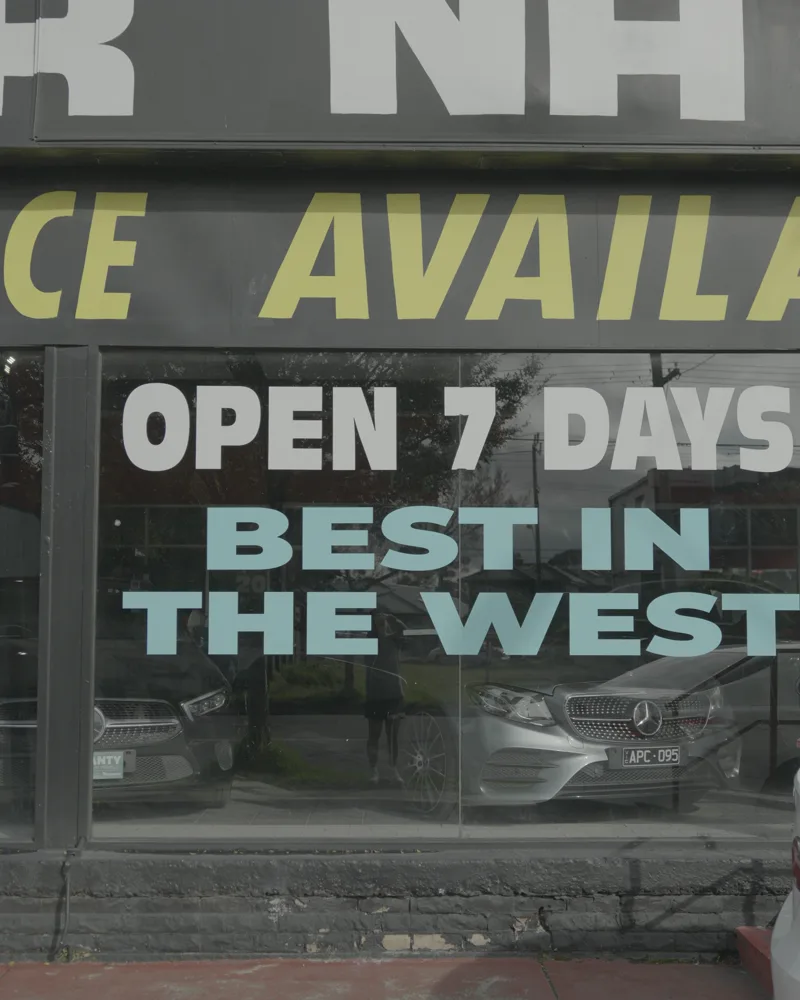
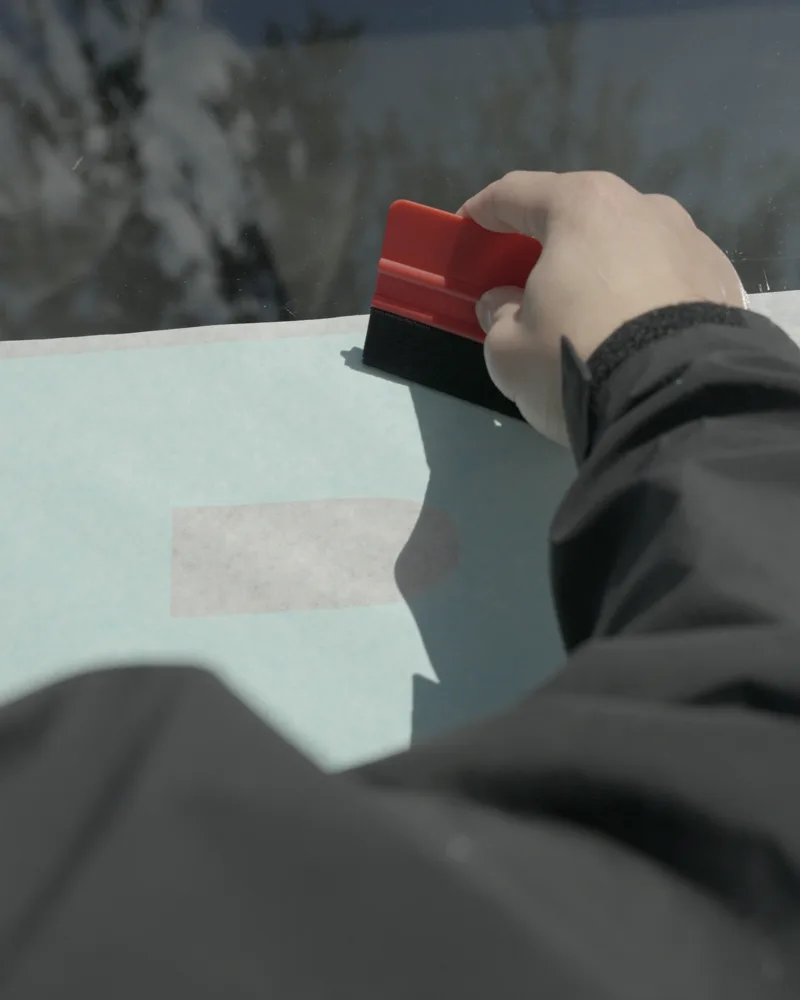
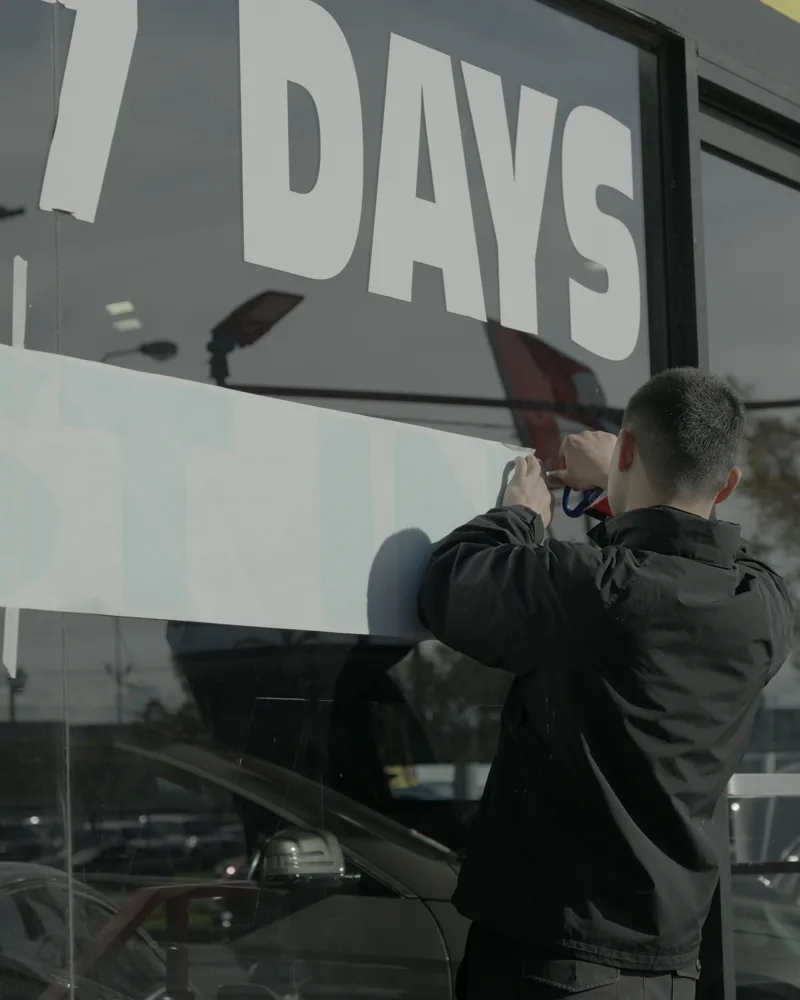
Cut vinyl lettering and full-colour printed decals for shopfronts, office glass and vehicle windows. Opening hours, promotions, logos and safety markers, applied to either face of the glass, with removable options for leased premises.
Glass is the cheapest advertising space a business already owns. A window sticker is either a shape cut from coloured vinyl with no background at all, or a full-colour graphic printed onto white or clear film and then cut out. The first suits text, logos and simple shapes. The second is what you need for photographs, gradients or anything with more than a couple of colours in it.
Made by Melbourne Trade Signs, a large-format print and signage company on Unit 6/43 Orbis Drive, Ravenhall VIC 3023, in Melbourne’s west. Printed in-house and installed Australia-wide. Phone 0415 743 691.
The decision most people skip is which side of the glass it goes on. Outside application looks sharper from the street and colours stay true, but the sticker takes the weather, the pressure washer and whatever the footpath throws at it. Inside application is protected and lasts longer, but the artwork has to be reversed, the colours read slightly duller through the glass, and any dirt on the inside face sits in front of the graphic.
We cut and print at Ravenhall and our own crews install, so the person measuring your glass and the person weeding the vinyl work in the same building. We will supply decals with application tape ready for you to fit, or come and do it. Installation runs Australia-wide, which matters if you are rolling the same window graphics out across a chain of stores.
Window graphics are a small set of materials used in different combinations. The table below covers what each one is for, which face of the glass it goes on, and roughly how long it holds up.
| Film type | Applied to | Look through glass | Typical life |
|---|---|---|---|
| Cut vinyl lettering | Either face | Sharp edges, no background, solid colour | Five to seven years outside |
| Printed white vinyl | Outside face | Opaque, blocks the view behind it | Three to five years laminated |
| Printed clear vinyl | Either face | Graphic floats, glass still reads as glass | Two to four years |
| White-ink printed clear | Inside face, reversed | Solid colour with no white panel around it | Three to five years |
| Static cling | Inside face | Slightly hazy, no adhesive at all | Months, and reusable |
| Removable printed vinyl | Either face | Identical to permanent while it is up | One to two years, peels clean |
| Perforated one-way film | Outside face | Graphic outside, view out from inside | Two to three years |
Measure the glass itself, not the frame, and tell us where the rubber seal sits. Vinyl will not stick to the seal, and a graphic sized to the frame ends up 20 mm too big in every direction.
Most shopfronts end up with two or three of these at once: lettering on the fascia, an hours decal on the door, and something seasonal filling the lower half of the glass.
Letters and shapes cut from a solid sheet of coloured vinyl, with everything around them weeded away. Nothing sits on the glass except the letter itself. It is the crispest option for a business name or trading hours, and it is one colour per cut, so a two-colour logo becomes two layers.
Full-colour artwork printed onto clear film with a layer of white ink behind it, so the colours stay solid instead of mixing with whatever is behind the glass. This is how a photographic or multi-colour graphic gets onto glass without a visible white rectangle around the edge of it.
The decal goes on the inside face with the artwork mirrored so it reads correctly from the street. Protected from weather, cleaning and vandalism, so it lasts noticeably longer. The trade-off is a slight loss of punch through the glass, and the inside surface has to be genuinely clean first.
Applied to the street face. Colours read at full strength and the edges of cut lettering look sharper because nothing sits between the vinyl and the eye. Choose it for cut lettering and anywhere colour accuracy matters, and expect to replace it sooner than an inside-applied graphic.
Small, high-value, and the thing customers actually look for. We set hours out in a clean grid rather than a paragraph, usually in white or a single brand colour so it reads against whatever is behind the glass day or night. Easy to replace when trading hours change.
Sale panels, new-season campaigns, event dates. Printed on removable vinyl so they lift off at the end of the run without a scraper and a heat gun. Multi-site retailers usually order the whole set at once and have our crews fit them across stores in one sweep.
Etched-look film for meeting rooms, bathrooms and glass entries. It obscures the view without blocking daylight, and can be cut with your logo or a pattern knocked out of it. It also does double duty as manifestation so nobody walks into a full-height pane.
Hospitality glass carries a lot of information: trading hours, licence details, menus, delivery partners, dietary symbols and whatever is on this week. The practical approach is cut vinyl for the permanent items and removable printed panels for anything that changes. Hours decals in particular get replaced more often than owners expect, so keeping the artwork on file means the next set is a reprint rather than a redraw.
A campaign that has to land in the same week across a dozen stores needs identical artwork, per-store glass measurements and installers who can work to a schedule. We print the full set here and our own crews fit them, in Melbourne and interstate. Store-by-store measurements are worth the hour it takes to collect, because glass sizes vary between fit-outs even inside one brand.
Ground-floor tenancies use window graphics for the business name, the suite number and a level of privacy at desk height. Frosted film with the logo cut out of it does both jobs at once. Where the lease carries a make-good clause, we specify removable film and note it on the quote, so nobody is negotiating over glass damage at the end of the term.
Rear windows and side glass on utes and vans take cut lettering for a phone number and a licence number, or perforated film if you want a full graphic and still need to see out. Vehicle glass flexes and heats, so we apply wet, squeegee out properly, and ask that the vehicle stays out of a car wash for the first day or two while the adhesive cures.
Window work has one requirement the other sticker jobs do not: we need to know which face of the glass it goes on before the file is set up, because inside application means the whole thing gets mirrored.
No usable file is not a problem. Send a photo of the existing signage and a logo in whatever form you have it, and we will redraw the lettering as clean vector paths before cutting.
Cutting and printing happen here, so the queue is ours to manage rather than a supplier’s. Where it gets less predictable is installation, because that depends on crew availability and your trading hours — most shopfront work is done before opening or after close. Give us your date early and we will tell you honestly whether we can hit it. Supply-only decals can be collected from Ravenhall or sent out.
Straight off our camera — printed in our own workshop and installed by our own crew.
Outside if colour punch and edge sharpness matter most, inside if longevity matters more. Vinyl on the street face is fully exposed to sun, rain, cleaning and passing traffic, and typically needs replacing sooner than the same graphic applied internally.
Inside application means the artwork is mirrored so it reads correctly from outside. It is protected, but it looks very slightly softer through the glass and any smudges on the inside face sit in front of the graphic. For shopfronts we usually put permanent lettering outside and seasonal promotional panels inside.
No, not the glass itself. Vinyl adhesive does not etch or scratch glass. What it can leave behind is a film of residue, and how much depends on the adhesive and how long the graphic has been up.
Removable vinyl peels off cleanly for a year or two. Permanent vinyl left on a sunny window for years will need heat and adhesive remover, which is slow work rather than damaging work. If your lease has a make-good clause, specify removable at the order stage and the end of the tenancy becomes a five-minute job.
Wet application. The installer sprays the glass with a slip solution, floats the vinyl into position, then squeegees the fluid out from the centre in overlapping strokes. Because the vinyl can still move while the solution is there, it gets aligned properly rather than committed on first contact.
Any small bubbles left usually contain water, not air, and disappear over a few days as it evaporates through the film. Dry application is faster and fine for small decals and cut lettering, but on anything large it is exactly how bubbles happen.
Yes, printed onto vinyl film with a white ink layer behind the image so the colours stay solid instead of washing out against the light coming through the glass. Without white ink, a photo on clear film looks like a weak transparency.
If you want the graphic covering the window completely, printed white vinyl is simpler and cheaper. If you want the image to appear to float on clear glass, clear film with selective white ink is the way to do it, and it takes a little more setup at the artwork stage.
Cut vinyl is a single sheet of coloured film with the shape cut out and the waste removed, so nothing sits on the glass but the letter or shape. Printed stickers are inkjet artwork on white or clear film, then cut to an outline.
Cut vinyl is one colour per layer and cannot do gradients or photographs, but the edges are mechanically cut and look sharper on close inspection. For a business name, trading hours or a simple logo, cut vinyl is usually the better looking and longer lasting choice.
Cut vinyl lettering applied outside typically lasts five to seven years, and printed laminated graphics three to five, depending mostly on how much direct sun the glass takes. West-facing shopfronts fade first, and one summer of afternoon sun does more damage than a whole winter.
Inside-applied graphics last longer, because they are shielded from physical wear entirely and from some of the UV. Promotional decals on removable vinyl are usually planned around the length of the campaign rather than the material, so they come down long before they wear out.
Perforated window film that carries a full-colour graphic on the street side while staff and customers still see out through the glass from inside the shop.
See the detail →Etched-look privacy film for meeting rooms, bathrooms and glass entries, cut with logos or patterns knocked out of it, and doubling as manifestation on full-height panes.
See the detail →Computer-cut letters and logos with no background at all, weeded and supplied on application tape ready to fit, or installed on your glass by our own crews.
See the detail →Browse the full list on our A–Z of everything we print, or see how this fits into signage in Melbourne.
Send us the measurements and a logo. We will come back within two business hours with options for supply only or supply and install.