Recent Work
Fascia signs, start to finish.
Straight off our camera — printed in our own workshop and installed by our own crew.
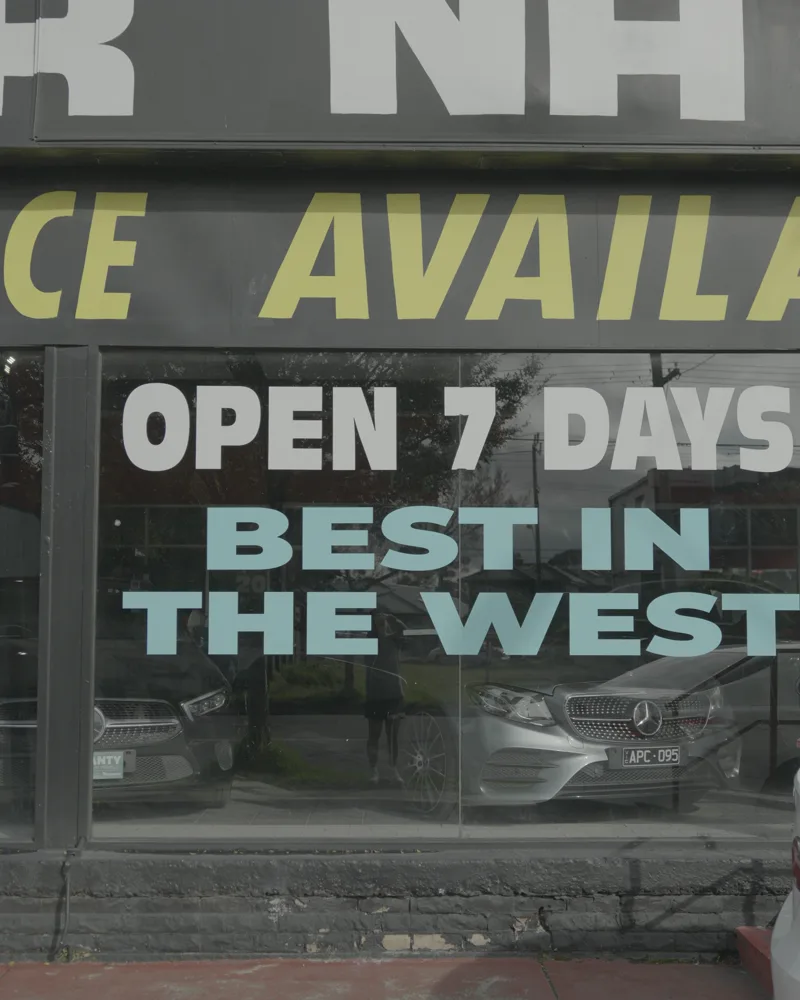
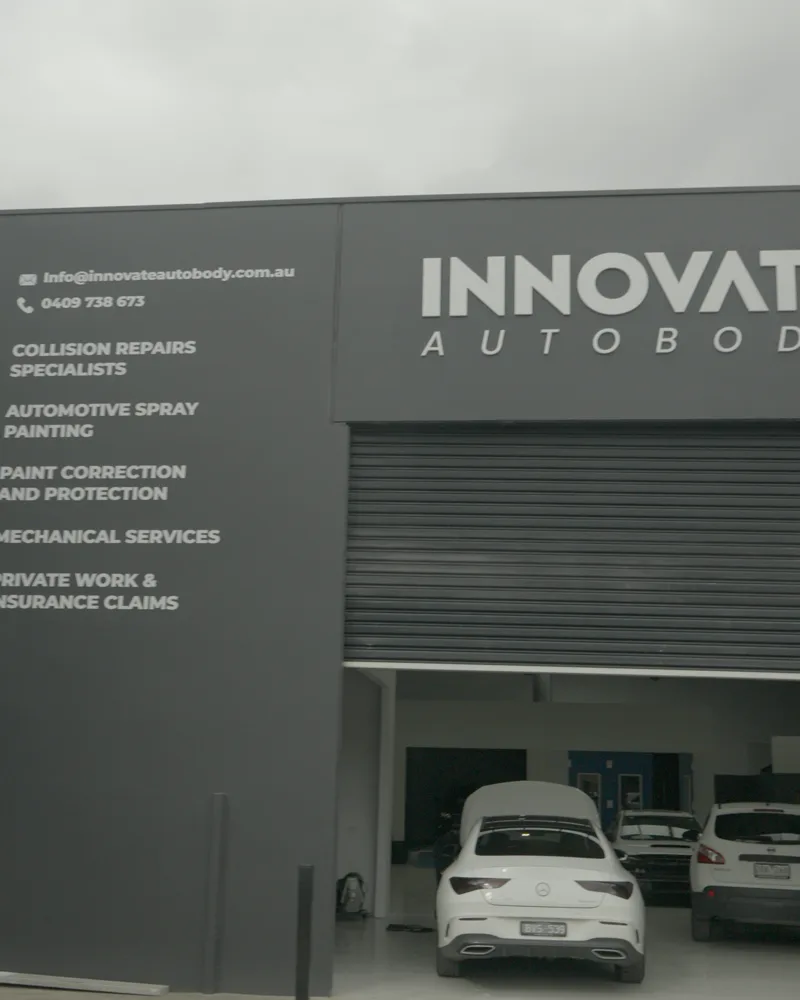
Shopfront signage done properly — Illuminated signs, 3D lettering, ACM fascia panels and window graphics — built at our Ravenhall workshop and fitted by our own installers. One team from the site measure to the last screw.
Your sign is the first sentence your business says to anyone walking past. It is read before the window display, before the menu board, and long before anyone finds your website. A sharp, well-lit, properly fitted sign makes a new business look established. A faded panel with a peeling edge does the opposite, no matter how good the coffee is behind it.
Melbourne Trade Signs makes shopfront signage at our own workshop on Orbis Drive in Ravenhall and installs it with our own crews. That matters more than it sounds. Most sign companies subcontract either the fabrication or the installation, which is where jobs slip — the panel arrives the wrong colour, the installer is booked three weeks out, and nobody owns the problem. We do both, so there is one number to call and one team accountable.
We fit out cafes, retailers, clinics, gyms, offices and industrial premises across Melbourne, and we work alongside shopfitters and fitout project managers as easily as we work directly with owners.
Most frontages end up with two or three of these working together — a fascia sign for identification, window graphics for what you do, and something under the awning for people already on the footpath.
The workhorse of shopfront signage. Aluminium composite panel cut to your fascia, printed or vinyl-finished in your exact brand colours, mounted flush. Rigid, weatherproof, comparatively affordable, and still sharp years later. If you are not sure what you need, this is usually the starting point.
Face-lit boxes that work as hard at 7pm as at midday. Essential if your trade runs into the evening or your frontage sits in shadow. We build the box, print the face and install it; the electrical connection is done by a licensed electrician. Note that illuminated signs are more likely to need a planning permit. See illuminated signs →
Built-up letters in acrylic or metal, flat-mounted or set on raisers so they throw a shadow line. Optionally halo-lit from behind. This is the finish that makes a business read as permanent and considered rather than newly arrived.
Precision laser-cut acrylic lettering with crisp edges, in any font, polished clear or coloured through. Works outdoors on a fascia and indoors on a reception or feature wall — a good way to carry the same look from the street to the counter.
Full-colour printed graphics, cut vinyl lettering, and frosted or etch-effect film for privacy. The cheapest square metre of branding on your frontage, and the easiest to change when your offer does. Applied neatly inside or out.
Perforated film that lets you print right across a window while people inside still see out and daylight still gets in. Ideal where you want a bold frontage without blacking out the shop or the staff behind it.
Signage angled to the footpath rather than the road, so people already walking past can find you. Often the difference between being seen and being walked past, particularly on a busy strip where every fascia competes.
Footpath A-frames, pull-up banners and portable displays for specials, daily offers and events. No minimum order — one A-frame is a job we are happy to do. Check your council's footpath trading rules before you put one out.
We would rather give you a real number for your frontage than a range wide enough to be useless. But it helps to understand what moves the price before you ask.
[PRICE TABLE — INSERT YOUR OWN “FROM” PRICES HERE. Real ranges from the business that actually prints the job will outperform every competitor’s guesswork, and they pre-qualify enquiries so you spend less time quoting jobs that were never in budget. Suggested columns: sign type / from price / typical range / what’s included.]
The fastest way to a real number: send us a photo of your shopfront with rough dimensions, or call 0415 743 691 and book a site measure. Quotes come back within 2 business hours during the week.
This is the question that catches people out, usually after the sign is already made. Worth ten minutes before you commission anything.
Signage in Victoria is controlled by Clause 52.05 of the planning scheme, which applies across all Victorian councils. Its purpose is to keep signage compatible with the character of an area, prevent visual clutter, and protect road safety. It works by sorting land into four categories, each with progressively tighter controls.
| Category | Where it applies | Level of control | Business identification signs |
|---|---|---|---|
| Category 1 | Commercial areas and retail strips | Minimum limitation | No permit where the total display area of all signs to the premises does not exceed 8 sqm |
| Category 2 | Office and industrial areas | Low limitation | As above to 8 sqm total, excluding direction signs |
| Category 3 | High amenity areas | Medium limitation | Permit generally required |
| Category 4 | Sensitive areas | Maximum limitation | Up to 3 sqm total, with a permit |
The distinction matters. A business identification sign tells people who and where you are — your name, logo, trading hours, what you do. A promotion sign advertises a product, service or offer. Promotion signs are controlled more tightly: in Category 3 areas they are limited to around 3 square metres with a permit, and in Category 4 areas they are prohibited outright.
Separate from council entirely. If you lease, your lease almost certainly requires the landlord's written consent for any signage attached to the building, and may specify what has to happen to the facade when you leave. In a strata or multi-tenant building, the owners corporation usually has a say as well. Both are worth confirming before you order, not after.
Sign categories are set by the zoning and overlays applying to your specific address, a Schedule to Clause 52.05 can vary the limits locally, and the provisions change — Amendment VC294 rewrote the sign exemptions in October 2025. This is a plain-English summary to help you scope the job. It is not planning advice and it is not a substitute for checking.
Contact the statutory planning team at the council for your municipality before you commission a sign. Substantial penalties can apply for displaying a sign without required approval, and the sign usually has to come down at your cost.
We come out, measure the frontage, photograph the fascia and check the practicalities — access, existing power, what is already mounted and what has to come off. Bring us a photo first if you just want a ballpark.
We come back with options, materials and finishes, and a price against each. If a cheaper approach suits your frontage better, we will say so. Quotes within 2 business hours once we have the measure.
We will tell you what we think your sign needs by way of council, landlord or body corporate approval and give you drawings and specifications to support the application. The application itself is yours to lodge, or your planning consultant’s.
Built and printed at Ravenhall. Fabrication, colour matching and finishing all under one roof, which is why the colour on the panel matches the colour on your brand sheet.
Our own installers fit it, including removing and disposing of the old sign and making good the fascia if that is part of the job. Licensed electrician for anything that needs power.
Your artwork and specifications stay on file. A second location, a refresh, or a matching internal sign is a phone call, not a fresh project.
We are based in Ravenhall in Melbourne's west, so the inner west and western suburbs are our backyard — but our installers work right across Melbourne metro, and we install nationally for multi-site clients.
[REPLACE WITH THE SUBURBS AND AREAS YOU ACTUALLY SERVICE REGULARLY. Genuine, specific coverage beats a padded list of 200 suburb names — search engines discount obvious location stuffing, and a customer can tell the difference. Group them naturally, e.g. “Inner west: Footscray, Yarraville, Seddon, Williamstown, Sunshine…”]
Outside Melbourne? We freight regional Victoria and interstate, and for businesses with premises in more than one state our own crews handle the install in each. See multi-site signage rollouts.
Straight off our camera — printed in our own workshop and installed by our own crew.
It depends far more on what the sign is than on how big it is. A flat ACM fascia panel is the most affordable permanent option; an illuminated lightbox or built-up 3D lettering costs several times that because of the fabrication, the componentry and the electrical work. Access matters too — a sign at ground level on a quiet street is a very different install to one above an awning on a main road needing a traffic permit and a lift.
Send us a photo of your shopfront with rough dimensions and we will come back with real numbers for your job rather than a range you cannot budget against. Quotes come back within 2 business hours, Monday to Friday.
Often, but not always. Signage in Victoria is controlled by Clause 52.05 of the planning scheme, which sorts land into four categories. In Category 1 and Category 2 areas — most commercial strips, office and industrial zones — business identification signage is commonly permitted without a planning permit where the total display area of all signs to the premises does not exceed 8 square metres. That is a cumulative cap on the premises, not a per-sign allowance, and internally illuminated or electronic signs have separate, lower limits. In Category 3 (high amenity) areas a permit is generally required, and in Category 4 (sensitive) areas the cap tightens to 3 square metres with a permit.
Heritage overlays change the answer again, and a Schedule to Clause 52.05 can vary the limits for a specific area. Check with the council for your municipality before you commission anything — penalties apply for displaying an illegal sign, and removing one you have already paid for is an expensive lesson.
The manufacturing is rarely the slow part. A flat ACM panel or window graphics can be produced quickly because we print in-house. Fabricated lettering and illuminated lightboxes take longer because they are built rather than printed. What actually sets the timeline is approvals — a planning permit application, landlord sign-off, or body corporate approval can add weeks.
The practical advice: start the approvals conversation as early as you can, and treat the signage as part of the fitout program rather than the last item on it.
For most Melbourne shopfronts, ACM (aluminium composite panel) is the workhorse. It is rigid, weatherproof, holds colour, sits flat against a fascia and is comparatively affordable. Acrylic suits cut lettering and internal feature signage where you want depth and a clean edge. Built-up metal or acrylic letters on raisers give the shadow-line look that makes a business read as established. Vinyl and film handle windows.
The real answer depends on your frontage, your brand and how the light hits it. That is what a site measure is for.
We build and install the sign, and the electrical connection is carried out by a licensed electrician. Tell us at quoting stage whether there is an existing power supply at the sign location, because running new power is one of the bigger swing factors in an illuminated sign budget.
Yes. Removal, making good the fascia, and disposal can be included in the quote. Worth asking about up front — if you are leasing, your lease may also require the sign to be removed and the facade reinstated at the end of the term, and it is cheaper to plan for that than to discover it during handover.
Either. Send print-ready files and we will run with them. If all you have is a logo, a rough idea or a reference photo of a sign you liked, that is enough to start — we will suggest options, walk you through materials and finishes, and turn it into something you can approve. There is no separate hoop to jump through for design help.
A well-made ACM fascia sign, installed properly, should hold up for five years or more outdoors. Fabricated metal lettering lasts longer. Printed vinyl and window graphics typically run three to seven years depending on the laminate and how much direct sun they cop. LED components in illuminated signs are usually the first thing to need attention.
North and west-facing frontages in Melbourne fade faster than south-facing ones — worth factoring in when you choose between a printed graphic and a fabricated sign.
Budgeting? Our signage cost guide explains what moves the price, from lettering to illuminated signs.
The full picture — every kind of sign we make, the materials behind them, and how to work out which one your job needs.
See the overview →More than one location? Same look in every store, every state, printed together and installed by our own crews.
See rollouts →Banners, pull-ups, posters, stickers, menus and one-offs. No minimum order and no job too small.
See the range →[ADD AUTHOR BLOCK + 3 REAL PROJECT EXAMPLES WITH SUBURB AND PHOTOS. Original photography of your own installs is the strongest trust signal on this page.]
A photo and rough dimensions is enough to start. We will come back with options and a real price, not a range.